
Introduction
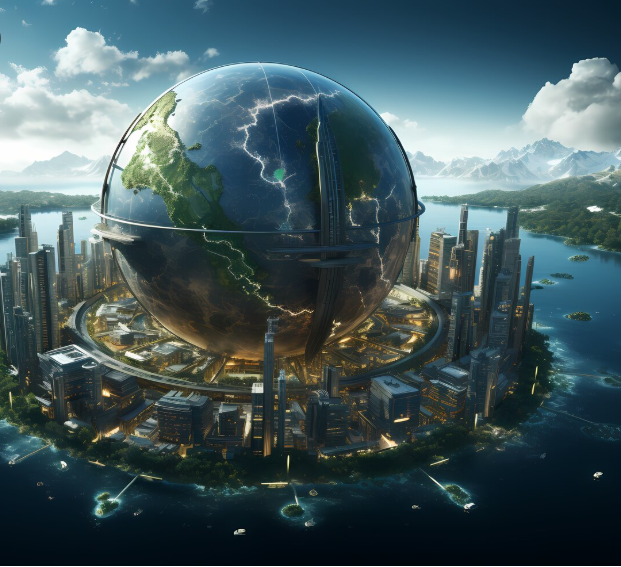
The gaming industry is moving beyond traditional virtual environments where everything revolves around the player’s actions. Modern game development increasingly explores persistent worlds that continue evolving even when players are offline. This concept, known as world state persistence, enables virtual environments to maintain their history, respond to events, and develop independently of direct player involvement.
By combining artificial intelligence, simulation systems, and persistent data storage, developers can create living universes where economies fluctuate, characters develop relationships, and environments change naturally over time.
What Is World State Persistence?
World state persistence refers to a game’s ability to preserve and update the condition of its virtual environment across gameplay sessions.
In traditional games, certain activities may pause or reset when players leave. However, persistent worlds retain important changes and allow selected systems to progress without continuous player participation.
These changes might include:
- Cities expanding or declining based on available resources.
- Non-player characters developing relationships and pursuing individual goals.
- Weather patterns influencing farming, transportation, and exploration.
- Political factions gaining or losing control over territories.
- Virtual economies responding to production, demand, and trade.
This ongoing development creates an environment that feels independent rather than entirely controlled by players.
How Living Game Universes Continue Evolving
1. Autonomous NPC Behavior
Non-player characters are essential to persistent virtual worlds. Instead of following repetitive scripts, advanced NPC systems can use artificial intelligence and decision-making algorithms to simulate individual behavior.
For example, a merchant might purchase supplies, adjust prices, or relocate to another settlement depending on economic conditions.
Similarly, NPC communities might establish alliances, experience conflicts, or rebuild damaged infrastructure without requiring direct player involvement.
These autonomous behaviors help create believable societies.
2. Dynamic Environmental Systems
A living universe requires an environment capable of responding to changing conditions.
Developers can introduce simulation systems that manage seasonal cycles, resource availability, wildlife populations, and environmental events.
A forest might gradually recover after a wildfire, while an abandoned settlement could become overgrown with vegetation.
Such developments create a sense of continuity and make exploration more meaningful.
3. Persistent Economic Simulation
Virtual economies become more engaging when supply and demand change over time.
In a persistent economic system, production, consumption, transportation, and resource scarcity can influence the availability and value of goods.
For instance, interrupted trade routes might increase food prices in a remote city. Meanwhile, a newly discovered resource deposit could attract merchants and encourage settlement growth.
These interactions create opportunities for strategic decisions and unexpected gameplay experiences.
Technologies Behind Persistent Worlds
Building a continuously evolving universe requires several interconnected technologies.
Artificial Intelligence: AI systems support autonomous characters, adaptive behavior, and decision-making processes.
Persistent Databases: Databases preserve changes to characters, locations, resources, and other important world elements between sessions.
Event-Driven Architecture: Events trigger updates when relevant conditions occur, reducing the need to simulate every activity continuously.
Cloud Computing: Cloud infrastructure can provide scalable processing and storage for large multiplayer environments.
Procedural Generation: Procedural systems help create environments, events, and content variations based on predefined rules.
Together, these technologies enable developers to construct virtual worlds that maintain continuity while responding dynamically to changing circumstances.
Challenges of Building Persistent Universes
Despite their potential, persistent worlds introduce significant technical challenges.
One major concern is computational efficiency. Simulating every character, environmental process, and economic transaction continuously would require substantial processing resources.
Developers often address this problem through simplified background simulations, scheduled updates, and event-based calculations.
Another challenge involves maintaining balance. If powerful factions expand indefinitely or essential resources disappear, the world could become difficult for returning players to enjoy.
Data consistency is equally important, particularly in multiplayer environments where thousands of players may influence the same world.
Developers must carefully design systems that preserve meaningful changes without creating instability or unfair gameplay conditions.
Why World State Persistence Matters for Players
Persistent worlds can fundamentally change how players interact with games.
Instead of experiencing a fixed storyline, players encounter environments shaped by previous events and ongoing simulations.
A player returning after several days might discover that a neighboring kingdom has expanded, familiar characters have changed occupations, or a trading settlement has become a major city.
These developments encourage exploration and create the impression that the world has a history beyond individual gameplay sessions.
Persistence can also strengthen emotional engagement because player decisions may produce consequences that remain visible over time.
The Future of Living Virtual Universes
As artificial intelligence, distributed computing, and simulation technologies advance, persistent game worlds may become increasingly complex.
Future systems could feature interconnected societies, evolving ecosystems, and characters capable of maintaining long-term goals and relationships.
However, successful implementation will depend on balancing technical sophistication with enjoyable gameplay.
The objective is not simply to create worlds that change constantly, but to develop environments where those changes feel meaningful, understandable, and rewarding.
Conclusion
World state persistence represents an important direction in modern game development. By allowing virtual environments to retain history and evolve independently, developers can create richer, more believable gaming experiences.
From autonomous NPCs to dynamic economies and environmental transformations, persistent systems offer opportunities for deeper immersion and emergent storytelling.
As development tools continue improving, living universes may become a defining feature of future interactive entertainment, transforming virtual worlds from static playgrounds into evolving digital ecosystems.
Read More :Spatial Audio Mechanics: Using Sound Cues as Core Gameplay Systems