
Introduction
Traditional computers have transformed nearly every aspect of modern life, but their architecture faces growing challenges as artificial intelligence becomes more complex. Conventional processors often require substantial energy to process enormous quantities of data, particularly when running sophisticated machine learning algorithms.
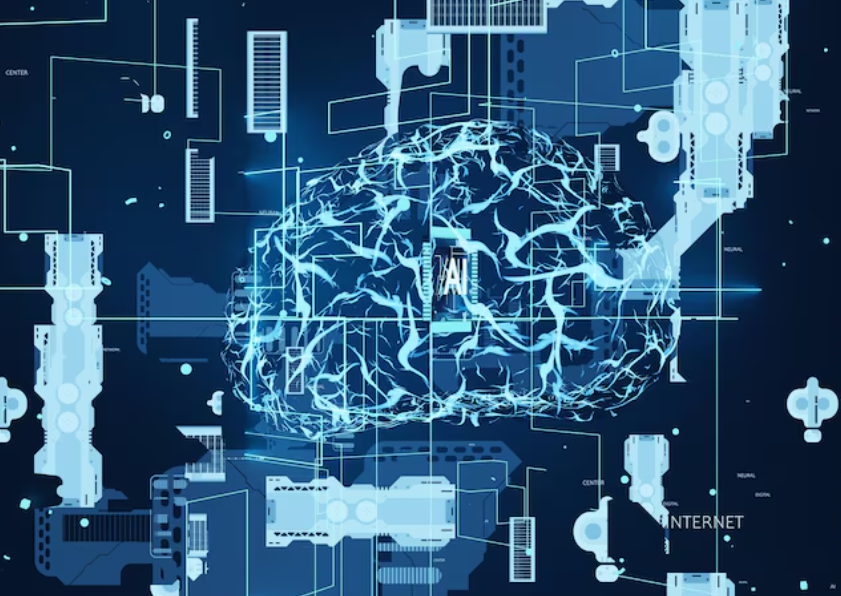
Neuromorphic computing offers a different approach by developing hardware architectures inspired by the structure and operation of the human brain. By modeling biological neurons and synapses, these systems aim to process information more efficiently while supporting adaptive learning and intelligent decision-making.
What Is Neuromorphic Computing?
Neuromorphic computing is an emerging computing approach that designs electronic circuits to imitate certain behaviors of biological neural networks. Unlike traditional computers, which typically separate memory storage from processing, neuromorphic architectures can bring memory and computation closer together.
The human brain contains billions of neurons connected through synapses. These connections transmit signals and change their strength based on experience, enabling learning and adaptation.
Neuromorphic systems attempt to reproduce selected principles of this biological communication through specialized processors, artificial neurons, and electronic synapses.
One important feature is event-driven processing, where computations occur primarily when relevant signals arrive rather than requiring continuous activity across the entire system.
Understanding Biological Synapses and Their Computing Models
Biological synapses are connections that allow neurons to communicate. Their strength can increase or decrease depending on neural activity, forming an essential mechanism behind learning and memory.
Neuromorphic hardware models these connections using electronic components that represent synaptic weights.
Artificial synapses can adjust the influence of incoming signals, allowing hardware-based neural networks to respond to changing information.
Some experimental systems use memristive devices, which can retain resistance states that represent stored information. These devices are being investigated because they may support compact memory and computation within interconnected circuits.
However, accurately reproducing biological synaptic behavior remains a major engineering challenge.
Key Hardware Architectures in Neuromorphic Computing
1. Spiking Neural Network Architectures
Spiking neural networks are among the most important models used in neuromorphic computing.
Instead of continuously exchanging numerical values, artificial neurons communicate through discrete electrical events called spikes.
Information can be represented through spike timing, frequency, or patterns.
This approach enables event-driven processing and may reduce unnecessary computation, particularly when incoming data is sparse.
2. Memristor-Based Architectures
Memristors and related resistive-memory devices are being researched as potential building blocks for artificial synapses.
Their adjustable electrical resistance can represent synaptic weights and support certain computational operations near stored data.
Such architectures may reduce energy spent transferring information between processors and memory.
Nevertheless, device variability, endurance, and manufacturing consistency remain important obstacles.
3. Mixed-Signal Neuromorphic Systems
Mixed-signal architectures combine analog and digital circuitry.
Analog components can model aspects of neuron and synapse behavior, while digital circuits support control, communication, and configuration.
This combination may provide advantages in energy efficiency while retaining the flexibility of programmable systems.
4. Specialized Neuromorphic Processors
Research platforms such as IBM’s TrueNorth and Intel’s Loihi demonstrate different ways to implement brain-inspired computation.
These processors use specialized neuron models and communication architectures to explore efficient neural processing.
Their designs highlight the potential of neuromorphic hardware for future intelligent computing applications.
Major Advantages of Neuromorphic Computing
Neuromorphic computing offers several potential benefits over conventional processing architectures.
Energy Efficiency: Event-driven computation can reduce unnecessary processing activity and power consumption in suitable workloads.
Real-Time Processing: Neuromorphic systems can respond rapidly to changing sensory information without processing every input through a large conventional pipeline.
Adaptive Learning: Certain architectures support mechanisms that allow neural connections to change according to incoming signals.
Parallel Processing: Large numbers of artificial neurons can operate simultaneously, helping systems process complex patterns.
Reduced Data Movement: Integrating memory and computation more closely can lower communication overhead.
These advantages depend on the hardware architecture and application, and do not mean neuromorphic processors outperform conventional computers in every task.
Applications of Neuromorphic Computing
Neuromorphic technology has promising applications across several industries.
In robotics, brain-inspired processors can help machines interpret sensory signals and react to environmental changes.
In healthcare technology, researchers are exploring neuromorphic approaches for processing signals from wearable sensors and medical monitoring devices.
Autonomous systems may also benefit from efficient event-based visual processing and rapid detection of changes in their surroundings.
Other potential applications include industrial monitoring, intelligent sensors, edge computing, and low-power artificial intelligence.
Challenges and Future Development
Despite its potential, neuromorphic computing faces significant limitations.
Developers must address hardware reliability, scalable manufacturing, programming complexity, and compatibility with existing AI frameworks.
Training spiking neural networks can also be more challenging than training conventional artificial neural networks.
Researchers are investigating improved learning algorithms, advanced semiconductor materials, and more practical development tools.
As these technologies mature, neuromorphic systems may complement conventional CPUs and GPUs rather than replace them entirely.
Conclusion
Neuromorphic computing represents an important direction in the development of intelligent hardware. By drawing inspiration from biological neurons and synapses, researchers are creating architectures that combine event-driven processing, parallel computation, and potentially lower energy consumption.
Although technical challenges remain, continued advances in artificial synapses, spiking neural networks, and specialized processors could make neuromorphic computing increasingly valuable for robotics, smart sensors, and edge AI.
The future of computing may depend not only on making processors faster but also on developing systems that process information more efficiently and adapt intelligently to their environments.
Read More :Slow Rail Journeys: Rediscovering Cross-Continental Travel by Train